Archive for February, 2022


Does the DOE have a disciplinary system anymore?

This year I haven’t had access to whiteboards/chalkboards in any of my classrooms. My principal got rid of the old ones, some of which were almost brand new, others of which were a bit blemished (but still usable). The point of getting rid of the old ones was to make room for new ones. But the new ones never came. Now, we’ve been teaching for more than half of the year without whiteboards at all. We’ve taken the issue to consultation, but what can they do? We can’t turn back time….the old whiteboards are at the dump! We just have to wait until the DOE can process and install the new supplies. Since in two of my rooms, smartboards don’t work either, that’s made teaching certain concepts…well…tricky.

It occurred to me the other day that the same thing has happened in terms of discipline. We had a system in place in most high schools where, when students did something that blatantly required disciplinary action–like assault another student or teacher–they got suspended. It turned out that when kids got suspended, they often got into even more trouble outside of school. It also turned out that there was disproportionate punishment for minority students. To make matters worse, a lot of the ways that schools were dealing with student infractions fed into the school-prison pipeline. So, the DOE rewrote the disciplinary code. It became harder to suspend students–which would be a good thing if they had also found another disciplinary solution.

But they didn’t find another disciplinary solution. And that’s a problem, because even with all the issues that come with suspensions, they still served a function: to address serious infractions on students/faculty/the school community. Over-discipling is an issue, sure. But have you ever tried to teach a group of students who were just part of a fight? It’s heartbreaking. The students can’t focus; many of them are shaking and scared. If fights happen a lot, they worry about the inevitability of getting caught in the crosshairs themselves. It is traumatizing to be a victim of violence; and it’s traumatizing to repeatedly witness violence. With discipline pretty much not used anymore, students fight a lot more. That means students are victims of violence a lot more. And it means students have to focus on their coursework after the persistent shock of seeing their classmates hurt a lot more.

Clearly, we can’t just let violence happen and do nothing, simply because of the negative effects of suspensions. We need some sort of solution. Enter Restorative Justice, which aims to find creative socio-emotional solutions to disciplinary issues by promoting a sense of dialogue, healing, and community. In theory, this sounds great. And New Action, along with the rest of United for Change, support it. As we write in the Community, Safety, and Equity section of our platform, we aim to: 

“Confront the school-to-prison pipeline. Expand effective, bottom-up restorative justice programs and hire UFT-represented restorative justice coordinators. Increase funding and support for culturally responsive education and extracurricular activities.”

Notice, we’re talking about building infrastructure for restorative justice. We tossed out suspensions for good reasons, but overwhelmingly we didn’t replace them with anything. In too many places, restorative justice is just a buzzword. People aren’t trained to properly implement the strategies, and what that means is where restorative justice is done at all—it’s often done badly and ineffectively. This has made a lot of teachers suspicious of its merits, and–if this is how the DOE plans to do restorative justice (i.e., essentially not doing it, just pointing to it)–then we have good reason to be suspicious. United for Change wants to hold the DOE to actually building up its Restorative Justice functionalities. You can’t just take down the whiteboards, and pretend everything is OK because there’s a smartboard in the room if the smartboard doesn’t work; you have to make sure there is something working to take the whiteboard’s place.

And one last point. There’s one place in schools where we do still see the word ‘disciplinary’ – in interactions between principals and teachers. Yes, students are no longer disciplined, but teachers are. In schools with abusive principals, we are constantly threatened with disciplinary action – and disciplinary action can lead to letters-in-the-file, suspensions, and expulsions with real and serious consequences on our mental health and livelihood. Much of the time, disciplinary action is also weaponized (illegally) against unionists. Maybe, a good place to start with restorative justice is by replacing the disciplinary system on teachers with such a program. After all, our PDs generally model how to teach a given technique. Let’s model a more equitable and humane disciplinary system for our students by using a more equitable and humane disciplinary system for our teachers. I can guarantee that getting rid of our own abusive and inhumane disciplinary system will help get teachers to buy into Restorative Justice programs for the students. 
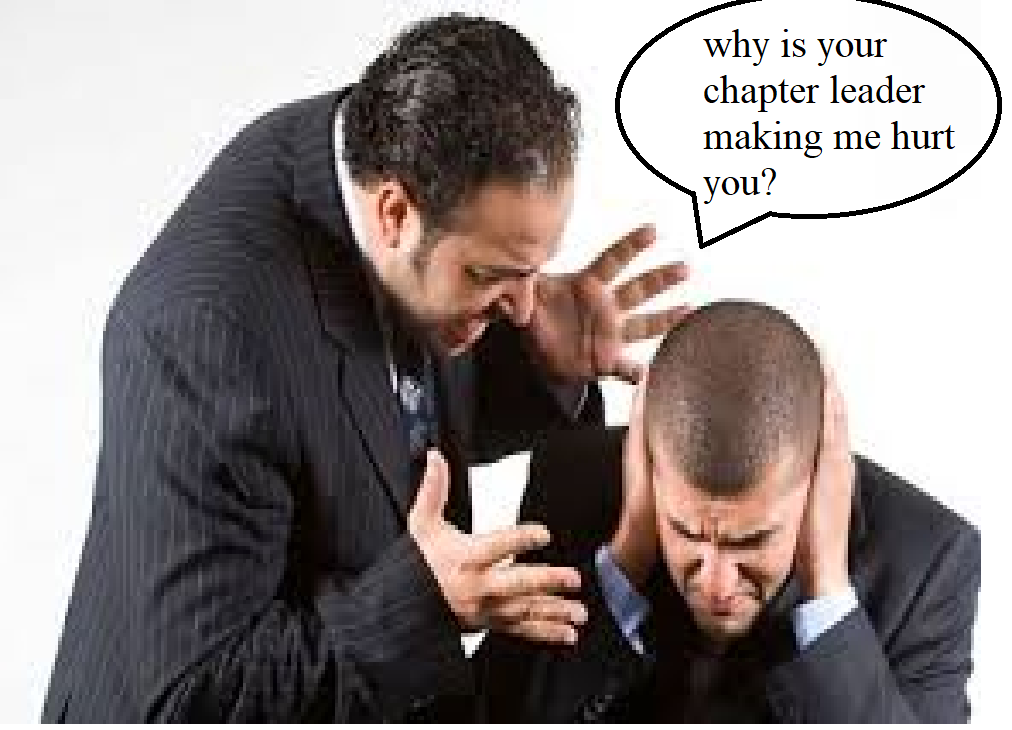
Mulgrew, we can’t let administrators justify abusing our members because of their union activity!

I am good friends with the Chapter Leader at a medium-sized high school. Within the last ten years, their founding principal retired and they got stuck with an extremely abusive replacement. It got so bad that they eventually had to have a vote of no confidence, the results of which were overwhelming. For the first time in years, they were optimistic that things might be looking up – that their work environment would no longer be toxic. They weren’t 100% sure what would happen next. But needless to say, they wouldn’t have gone through all the trouble if they knew the answer would be nothing at all. Despite the assurances of their UFT District Rep. and Borough Rep. that Michael Mulgrew was coming through for them at the Chancellor level, the Chapter Leader and their school was completely ghosted by both the UFT and the DOE. 

So, those of the staff who stayed on are faced with a dilemma. How do they organize as a union, when their administration knows that our union leadership won’t back them up? How does the Chapter Leader do their job, knowing that the UFT and DOE won’t give a damn if they’re retaliated against?

One of the answers that Unity Caucus often gives is to pick (i.e. limit) your battles (so that the principal doesn’t fly into a rage and destroy you and everyone else in their path).  I’ve found that this advice works pretty well in schools with high morale. In schools like that, few and minor contractual violations are offset by a culture in which observations are fair, disciplinary meetings are few, and where administration looks the other way on other aspects of the contract. It’s trickier in schools with low morale like this one, where the word ‘discipline’ is thrown around like candy (to teachers, not to students of course). In schools like this one, you can pretty much guarantee that each APPR domain will be rated a full point lower than what you actually deserve (unless you befriend the principal – in which case you’ll be given great ratings and innumerable per session opportunities). As for contractual responsibility, it’s enforced to a T against teachers, but the second you point out that an ask by administration is unreasonable or clearly violates the collective bargaining agreement, you’re met with a mix of (1) gaslighting; and (2) unchecked anti-union rage (sometimes, paradoxically, at the same time).

  1. In the gaslighting scenario, toxic administration reminds the aggrieved, exhausted, and overworked teachers that they work at one of the good schools. They’re only asking you do to a ‘little more than our contractual agreement,’ but all the extra paperwork is really for the kids – why not just do it? This doesn’t work so well for veteran teachers who were there for the vote of no confidence, most of whom have seen what actual good schools look like. In my experience, this strategy works some of the time for younger teachers, who are less likely to have worked with another principal in their career. ‘Maybe this is as good as it gets,’ they say amongst themselves in the teachers lounge; ‘why are we rocking the boat?’ It can also work for  teachers on the good side of administration, who have reaped such rewards after befriending the principal that it’s impossible for them to empathize with the majority of teachers who are drowning in toxicity. 
  2. In the unchecked anti-union rage scenario, the principal retaliates against the Chapter Leader and/or other union activists. They can do this by weaponizing APPR or the disciplinary system (since we can no longer grieve letters in the file, after all). Or, they can combine rage and gaslighting by telling the entire school population that: yes, they are about to be truly terrible abusers to all of the teachers, but it’s only as punishment for the Chapter Leader having had the audacity to try and enforce the contract. (I’m pretty sure this would count as corporal punishment if we used it as a classroom management approach in our classes, but I digress). 

In schools like this one, picking even a small number of battles eventually leads to one or both of these situations, no matter now ‘nicely’ the contractual issue is brought up. Since the Unity-led UFT got rid of its centrally administered programs to identify and compel the DOE to deal with abusive administrators, we no longer have mechanisms to help chapters in trouble. In the age of Janus, I’m afraid that this means a lot of our members will eventually leave the union, seeing that all it gets them is unchecked rage from abusive administration and no help from the UFT leadership once things escalate. I don’t want that to happen. I want a better union that backs up chapters when they’re in trouble. I want a union that at least tries to force the DOE’s hand to get rid of abusive administrators (rather than a union that ghosts real chapters in trouble, but uses our dues-money to post celebration videos that double as election ads when one administrator gets a vague cease and desist notice after four long years of arbitration). United for Change supports strengthening programs to actually identify abusive principals and help chapters end the abuse. This is a bare minimum for any union, and while those types of actions take serious organizing, UFC is willing to do the work; Unity has shown us that they are not.

Valentine’s Day Healthcare Rally


Learn more about

our UFT Caucus

Content Policy

Content of signed articles and comments represents the opinions of their authors. The views expressed in signed articles are not necessarily the views of New Action/UFT.
Follow New Action – UFT on WordPress.com
February 2022
M T W T F S S
 123456
78910111213
14151617181920
21222324252627
28  

Blog Stats

  • 401,256 hits